
Stainless steel panels are manufactured by bending the surface material into a box shape and reinforcing it with backing material, surrounding frame, and lateral supports. Even thin stainless steel or titanium sheets can be constructed into panels suitable for walls, ceilings, and other applications by appropriately designing the sheet thickness, panel dimensions, reinforcement pitch, and joining method.
01Basic structure of stainless steel panel
The basic form is a box shape with the four sides of the surface metal plate bent. Even materials that are prone to bending when left flat can be made more self-supporting as a panel by combining bending and back reinforcement.

A wider variety of panel structures are compared in the structural and installation guide for decorative metal panels .
02Differences in plate thickness and reinforcement concepts
Existing articles typically showcase examples of panelizing stainless steel panels of around 1.5mm thickness, as well as thinner sheets of 0.3mm, 0.6mm, and 1.0mm thickness, and titanium panels of 0.3-0.4mm thickness.

| Examples of materials and plate thicknesses | Design principles |
|---|---|
| 1.5mm stainless steel | An example of a typical panel structure |
| Stainless steel 0.6-1.0mm | Back reinforcement reduces sagging. |
| Titanium 0.3-0.4mm | Utilizing lightweight and expensive materials in thin sheets |
03Back reinforcement to support the thin plate
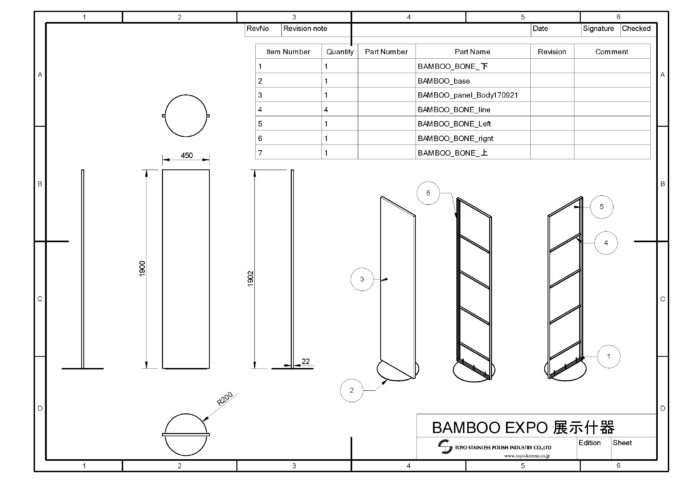
Because thin panels are prone to warping and denting, they are combined with backing material, surrounding frame, and lateral supports. Below are some representative design examples from our company that have been featured in previous articles.
04Five steps in stainless steel panel manufacturing
The surface material is made into a box shape.
In this example, 1.0mm stainless steel is used.
The example uses a 3.0mm x 20mm angle.
In this example, the pitch is approximately 500 mm.
Existing examples employ an adhesive method.
These dimensions are examples from existing articles. The reinforcement design will vary depending on the actual panel dimensions, materials, and mounting conditions.
05Concepts of bonding and welding
In existing fabrication examples, adhesive bonding is used instead of welding to combine back reinforcement while minimizing the thermal impact on the thin sheet metal. The appropriate joining method varies depending on the material, strength, usage environment, and maintenance method.
06Application to walls and ceilings
The reinforced metal panels can be used on interior and exterior walls, ceilings, and other surfaces. The installation method will be determined based on the panel structure and site conditions.


The cutting and bending structure of 3D design panels , the mounting structure of 3D design stainless steel panels , and the joints and screws can be found in the 3D design stainless steel ceiling FAQ .
07How to choose a panel structure
| Items to check | Key points to consider in design |
|---|---|
| Plate thickness/material | Weight, deflection, machinability |
| panel size | Reinforcement pitch, transportability, and ease of construction. |
| Surface design | Thermal effects on mirror finishes, polishing, and 3D shapes |
| 取付場所 | Walls, ceilings, indoors and outdoors, safety |
| Joining method | Adhesion, welding, rivets, screws, etc. |
When comparing structural variations across different types, please refer to the Design Metal Panel Structure Guide as your main page.
08FAQ/Summary
Can thin stainless steel sheets be used to make panels?
Thin sheets can be made into panels by reinforcing them with backing material, surrounding frame, and lateral supports.
What shape should the surface material be?
In the basic example, the four sides are bent to form a box shape. Other structures are also possible depending on the application.
Can it be made using only adhesive?
While existing articles have presented examples of adhesive bonding methods, the actual bonding method should be selected according to the required strength, environmental, and safety conditions.
Summary
Stainless steel panels are constructed by bending thin surface material and combining it with back reinforcement and joining methods. It is important to first determine the plate thickness, size, surface design, and installation location, and then design the necessary reinforcement and fittings.