Stainless steel is a highly corrosion-resistant metal, but depending on the purpose, coatings or coloring treatments may be applied to the surface. The important thing is to clarify which of the following you want to achieve—identification, aesthetics, fingerprint resistance, corrosion protection, hygiene, or heat resistance—before deciding "what to apply." This article will organize this based on six purposes.
01Six purposes of coating stainless steel
| Objective | Typical example | Points to check |
|---|---|---|
| Identify | Printing, painting, and marking | Visibility/durability |
| design | Color clear, vibrant, PVD | Compatibility with surface preparation |
| fingerprint resistant | Transparent coating | Gloss change and ease of cleaning |
| Corrosion prevention | Protective coating | Environment, edges, and construction conditions |
| Antibacterial/antiviral | Functional surface treatment | Performance Basis and Application Conditions |
| Heat rejection | Heat-shielding surface treatment | Temperature conditions/required performance |
02Coating for design and coloring
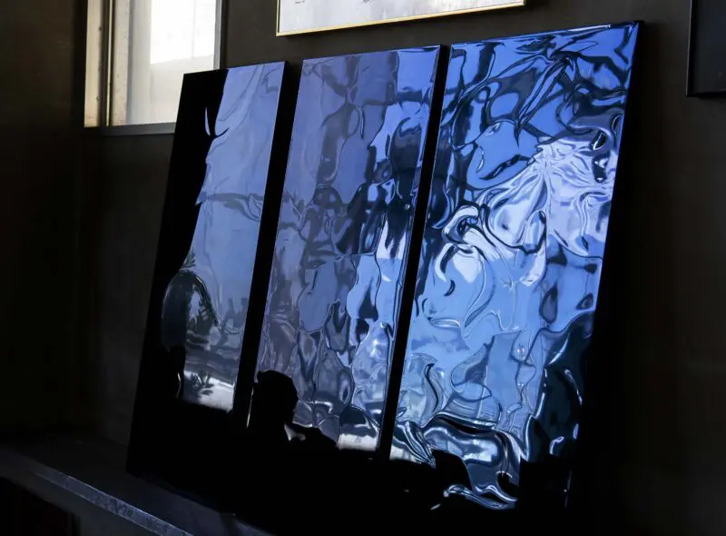
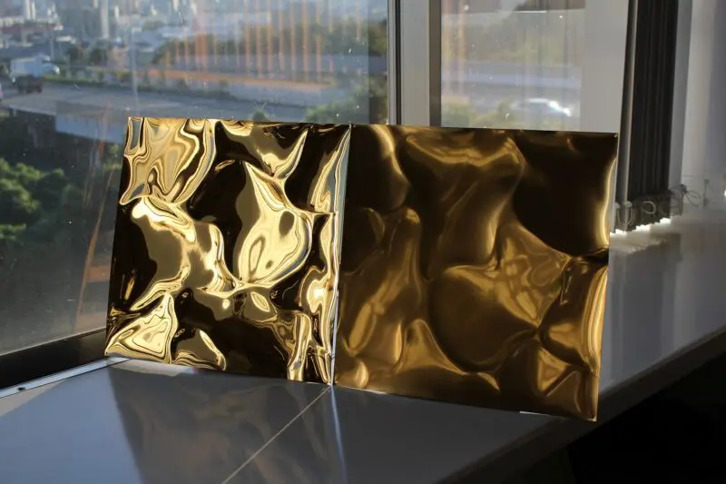
To preserve the metallic texture, transparent or translucent treatments are effective. Color clear coats allow the polished pattern to show through and layer colors, while chemical and electrolytic coloring utilize the surface condition to express color. PVD is a method that imparts a hard color tone using a vacuum process.
Colored stainless steel in general is explained in the section "What is colored stainless steel?" , and PVD gold is explained in detail in the section "PVD gold" .
03Fingerprint resistance and cleanability
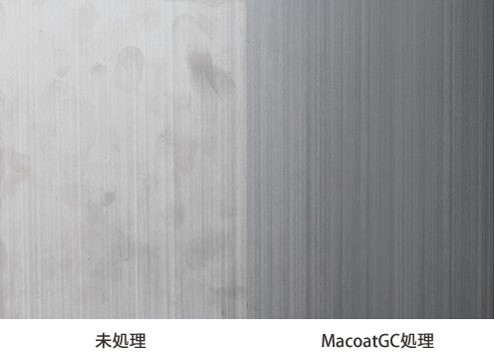
Mirror-like surfaces, hairline finishes, and vibration-resistant surfaces may show fingerprints and sebum depending on lighting conditions. Anti-fingerprint coatings are selected not to completely eliminate fingerprints, but to improve the visibility of dirt and ease of wiping.
Because coatings can alter gloss and color, it's crucial to check the sample on the same polished surface as the final material.
04Corrosion prevention and outdoor use
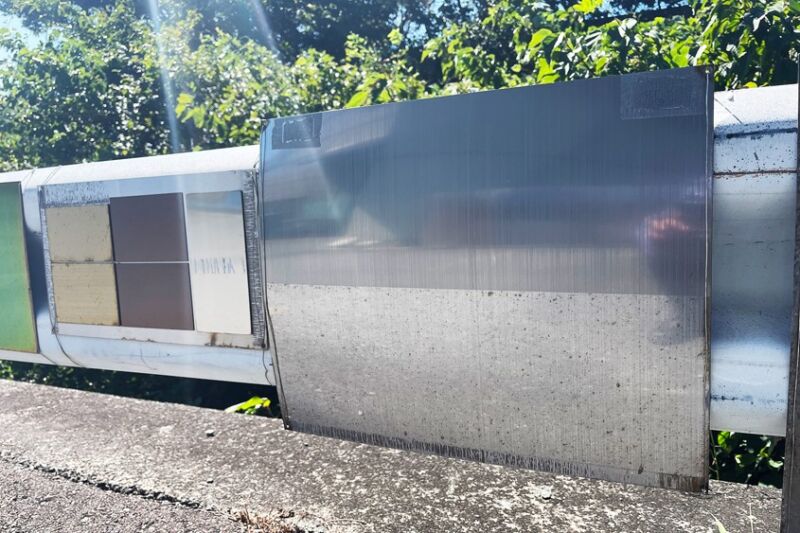
Stainless steel exhibits varying corrosion resistance depending on the type of steel, and rust can occur in environments with airborne iron particles, salt, or acidic conditions. Coating is one solution, but it does not replace the selection of steel type, drainage, or cleaning plan.
For examples of rust removal from stainless steel signs, please refer to the article on rust removal from stainless steel signs , and for material comparisons, please refer to the comparison of metal corrosion resistance .
05Steps to avoid mistakes when selecting a coating
- Organize your objectives into one or more categories.
- Determine the usage environment and cleaning method.
- Determine the base material, steel type, and polishing finish.
- Check the color and gloss of the coating using a sample.
- Check the construction conditions, including the ends, bends, and welds.
The final finish depends not only on the performance of the coating film, but also on the surface preparation and application quality.
06FAQ/Summary
Is rust-preventive coating unnecessary for stainless steel?
It depends on the environment and the type of steel. Depending on conditions such as salt damage, airborne iron dust, and chemicals, countermeasures will be considered.
Can the polished surface be colored while retaining its texture?
There are methods that can make the most of the appearance of the base material, such as color clear coats, vibrant colors, and PVD.
Does the anti-fingerprint treatment change the appearance?
Because the gloss and color may change slightly after processing, it is recommended to check a sample with the same base material.
Choosing a coating for stainless steel is fundamentally about working backward from the purpose and environmental considerations. By evaluating the material, polishing, and surface treatment as a single specification rather than deciding them separately, it becomes easier to achieve a balance between design and functionality.
DocumentImage archive of the original article