
Aluminum is a lightweight, easily processed metal that allows you to take advantage of its silvery-white appearance. On the other hand, surface protection becomes important in outdoor and salty environments. In this article, based on the records of a 1028.8-hour salt spray test conducted in the original article , we compare test pieces treated with MaCoat GC® on A1050 and A5052 with anodized aluminum, SUS304, IP gold titanium, and ZAM.
01Corrosion resistance and surface treatment of aluminum
Aluminum is generally used with its surface protected by anodizing (a type of anodic oxidation coating), painting, or clear coating. While these enhance corrosion resistance and aesthetic appeal, the white, bright texture of the aluminum base material can change depending on the finishing method.
For a broad comparison of the corrosion resistance of different metals, refer to "Metal Corrosion Resistance Comparison ," and for aluminum design, " Designing Aluminum" is also a useful resource.
02The purpose of trying out MaCoat GC
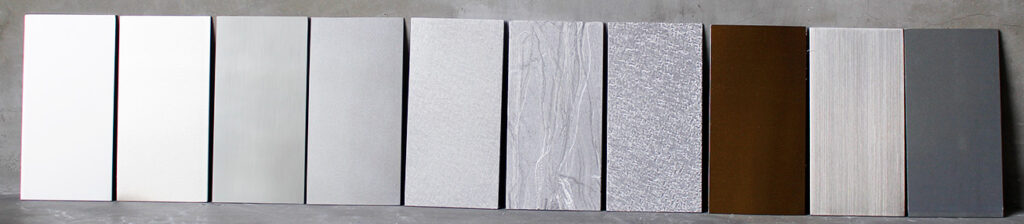
The original article evaluated MaCoat GC as a method to enhance corrosion resistance while preserving the original texture of aluminum as much as possible. The subjects included multiple design finishes such as mirror and bead blast on A1050, and vibration, Umeeda®, and Metal Kilim on A5052.
The goal is to compare whether there are differences in corrosion status not only due to the presence or absence of MaCoat GC, but also due to differences in A1050 and A5052 materials, as well as differences in surface finish.
03The role of salt spray testing
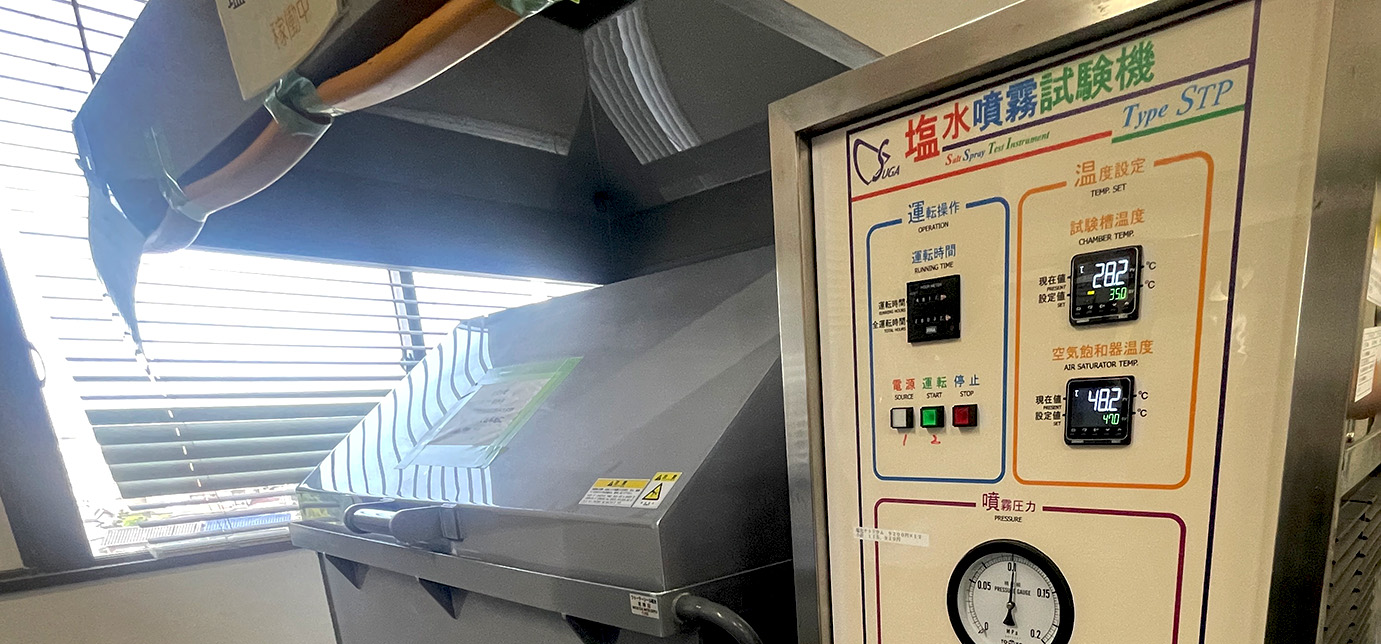
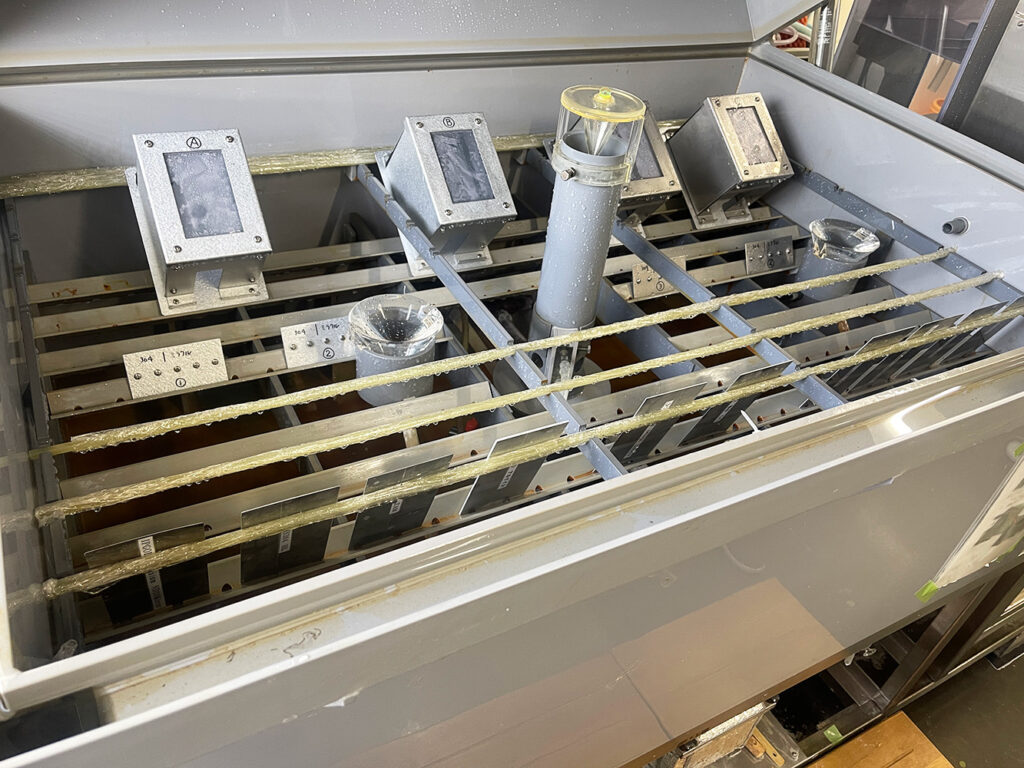
The salt spray test is a test in which salt water is continuously sprayed onto a test specimen and the corrosion state is compared. The original article also mentions the neutral salt spray test and the CASS test.
| Examination | Outline | How to read |
|---|---|---|
| Neutral salt spray | Typical comparative tests using a 5% sodium chloride solution | Compare the corrosion trends between test specimens. |
| Cass | Under more severe conditions, when acetic acid and cupric chloride were added to saltwater. | Since the conditions are different from those of neutral salt spraying, they should not be directly considered the same. |
Salt spray time cannot be directly converted into years of outdoor use. The original article also treats this not as a test that reproduces all factors of the real environment, but as a comparative evaluation of conventional products and development products.
04Test specimens compared
| Materials and finish | For comparison purposes |
|---|---|
| A1100 anodized aluminum | Comparison with general aluminum surface treatments |
| A1050 raw wood | Standards for untreated aluminum |
| A1050 mirror + MaCoat GC | Protective effect on glossy surfaces |
| A1050 Bead Blast + MaCoat GC | Comparison on a matte surface |
| A5052 Vibration / Umeeda / Metal Kilim + MaCoat GC | Comparison by alloy and design finish |
| IP Gold Titanium | Comparison with highly resistant materials |
| SUS304 hairline finish | Comparison with general-purpose stainless steel |
| ZAM | Comparison with surface-treated steel sheets |
The testing and durability of IP Gold Titanium are also explained in the IP Gold Titanium technical article .
05211–1028.8 hours elapsed
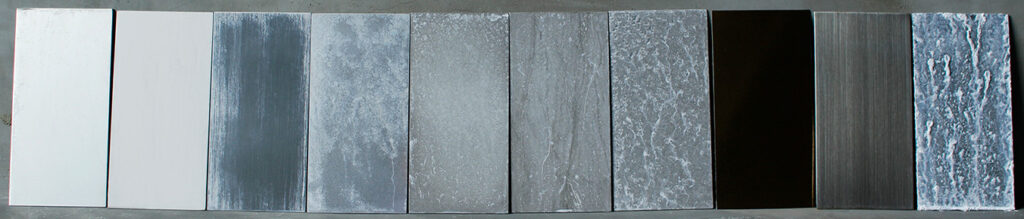
The original article includes photographs and records of the progress at 211 hours, 477.5 hours, 812.5 hours, and 1028.8 hours. The important aspect of this record is that it tracks the progression of corrosion in the same test group, rather than just focusing on a single point in time.
The following illustrations retain all the detailed photographs from the original article, including those taken before the start of the trial, during follow-up observations, and after 1028.8 hours.

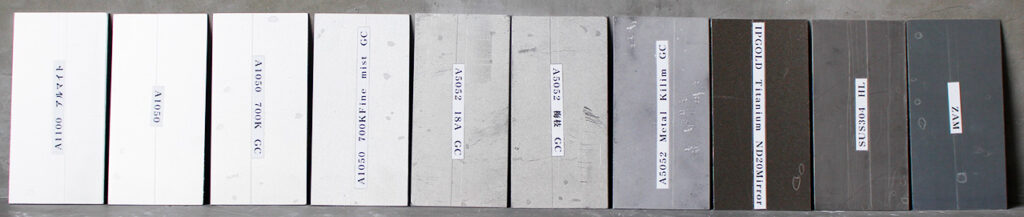


06Comparison results after 1028.8 hours
After 1028.8 hours, the original article records that the A1050 mirror + MaCoat GC showed less damage to the mirror surface and relatively better gloss compared to the raw A1050 material. However, some partial corrosion was observed.
A1100 anodized aluminum showed stain-like corrosion and reduced gloss, SUS304 hairline aluminum showed light brown initial rust, and ZAM aluminum showed significant corrosion. No damage was observed in the original article's observations of IP gold titanium.
This is a comparison result under identical test conditions and does not directly guarantee outdoor lifespan or service life in a specific region.
07Selection of application and points to note
The original article concludes that aluminum treated with MaCoat GC is recommended for indoor design applications . For outdoor use, material selection should be tailored to environmental conditions such as inland, coastal, and hot spring areas, and may include stainless steel or titanium.
For harsh corrosive environments such as coastal areas and hot springs, please also see our sections on hot spring corrosion, titanium , and stainless steel exterior wall selection .
08FAQ/Summary
How many years outdoors is equivalent to 1028.8 hours of salt spraying?
A direct conversion is not possible. Since this test does not reproduce real-world conditions such as temperature, humidity, salinity, rain, and contact between dissimilar metals, the results should be interpreted as a comparative test.
Can aluminum be used outdoors if it's coated with MaCoat GC?
The original article recommends using aluminum treated with MaCoat GC for indoor use. For outdoor use, consider anodizing, painting, stainless steel, titanium, and other options depending on environmental conditions.
Which finish did you use for the test?
We are comparing A1050 with mirror and bead blast finishes, and A5052 with vibration, plum branch, and Metal Kilim finishes, among other design finishes.
Summary
This test provides comparative data for evaluating surface protection that preserves the texture of aluminum. While MaCoat GC demonstrated a certain level of protection during the test, its application needs to be determined based on environmental conditions and the desired appearance.